
Equal Day, Equal Night: Finding Balance in What You Own

Fall Equinox Newsletter!
One day of equal measure. Today the sun crosses the celestial equator, and for one day light and dark hold even. "Equinox" comes from the Latin for equal night.
I think about balance a great deal in this work, because intellectual property is a balancing act at every turn. You want your name known, and you want it protected. You want your work shared widely, and you want to decide who profits from it. You want to move quickly on a new idea, and you want the paperwork underneath it to hold.
The equinox is a useful day to stop and ask whether those scales are actually even in your own business. This issue walks through four things: what you created this year, where the gaps usually hide, what is new at the Trademark Office, and a short list of housekeeping worth finishing before the year turns.
My own fall already has a rhythm to it. My son is back in school and deep into after-school theatre, so our evenings now belong to the arts calendar. In the quieter hours, the dog and I walk under leaves that have just started to turn rich and beautiful orange colors and crunch under our feet, which is my favorite part of the day right now.
The Harvest: Take Stock of What You Made
Farmers count the crop before they decide what to store and what to sell. Creative businesses rarely do the equivalent, and it costs them.
So take ten minutes and write down everything you brought into the world since spring. Not the polished launches only. All of it.
What did you name this year? Products, services, programs, a podcast, a new offering.
What did you write, film, photograph, record, design, or code?
What templates, frameworks, or systems did you build that other people now use?
What did someone else make for you? Logos, illustrations, site copy, music, video edits.
What did you make with the help of an AI tool?
Of everything on this list, which three items earn you the most money?
That last question matters most. Your protection budget should follow your revenue, and the answer is often a surprise. The tagline you wrote in an afternoon may be carrying more weight than the product you spent six months on.
Here's why I ask. A client came to me with a catch phrase they loved and a set of partner pitches nearly ready to send. We ran a clearance search before anything went out, and we needed to change the phrase. We pivoted together, they landed on a line they liked just as well, and the pitches went out with nothing hanging over them. The search took a few days. Reworking that phrase after it was already in front of partners would have cost considerably more than that.
Equal Night: Where the Gaps Usually Hide

Every inventory turns up a few soft spots. These are the five I see most often, and all of them are fixable.
The contractors with no paperwork. If a freelancer created your logo, your site copy, or your course materials, and nothing was signed, then the copyright in that work most likely still belongs to them. Calling it work for hire in an invoice does not make it so. You need a written assignment, and you can still get one now.
The name you never cleared. If you have been using a business name, product name, or tagline without a search, then you are carrying an unknown risk. The longer you build on that name, the more expensive a rebrand becomes.
The domain or handle in someone else's account. Check who is listed as the registrant on your domain and who holds admin rights on your social accounts. If the answer is a web designer you stopped working with in 2023, then please make that this week's task.
The registration that no longer matches reality. Logos evolve. If the mark on file at the Trademark Office is two redesigns behind what you actually use, your registration may be protecting something you no longer sell under.
The AI question. If you used a generative tool to help produce something you sell, then two questions follow. First, how much of it is human authorship, because that is what copyright protects. Second, what do the tool's terms say about ownership and about your inputs. If you are licensing that work to a client, they will eventually ask you both questions, and the better time to have an answer is before the contract.
None of these is a crisis. All of them are cheaper to solve in September than in a January dispute.
Worth Knowing: The Trademark Office is Using AI Now
The USPTO has rolled out several AI features on the trademark side this year, and they are genuinely useful to know.
Image search. You can upload an image and search the trademark database for similar marks. It is a beta feature and requires a USPTO.gov account. For anyone with a logo rather than a word mark, this is a real improvement over guessing at design search codes.
Mark description and color claim generator. A drafting aid for two parts of the application that trip up self-filers constantly.
Class ACT. The office's own classification tool, which automatically assigns international classes to unclassified applications and generates design search codes. This one runs on their side and shortens processing.
Here is my honest read. These tools are a good first look, and I am glad they exist. A clearance search is still a different exercise. An image search tells you what is already on the federal register. It does not tell you about common law rights, state registrations, a company using the name without ever filing, or how an examing attorney will weigh confusion between two marks that look nothing alike but sound identical. The judgment call is the part you are paying a lawyer for, and that part has not been automated.
Use the new tools to get oriented. Please do not use them as your clearance.
Straight from the source, if you want to read further: Trademarks introduces AI features to make your experience easier and Head of the class: Trademarks at full power with USPTO's AI tool.
Fall Housekeeping Checklist
Seven items. Most take under an hour.

Calendar your renewal windows. For any federal registration, note the Section 8 declaration due between the fifth and sixth year, and the combined Section 8 and 9 renewal between the ninth and tenth year. Missed deadlines cancel registrations, and the office does not chase you.
Check your specimens against reality. Pull up what you filed and compare it to how you actually use the mark today. If they have drifted apart, you have a problem waiting at your next filing.
Confirm domain and handle ownership. You, or your entity, should be the registrant and the admin on every domain and social account. Turn on auto-renew while you are there.
The other four cover specimens, your logo against your registration, squatters on the platforms you do not use, and where all of it is written down. Send a request in the contact form to get the full one-page checklist and it lands in your inbox, ready to print and use.
Planting For Next Season
The other half of a harvest is deciding what goes in the ground.
If you are launching something in the first quarter of next year, then the clearance work belongs in October. A search and a considered opinion take a couple of weeks. Filing is fast, and then you wait: the application sits before it reaches an examining attorney, and an office action adds months more. None of that stops you from launching, and all of it is easier to absorb when you learn about a conflict before the packaging is printed.
Two things worth putting in next year's budget now:
A clearance search for anything you plan to name in the first half of the year.
A contract template refresh, particularly your contractor agreement and your client licensing terms. If you have been editing the same document since 2023, then it is probably behind on AI, on deliverables, and on how you actually work.
On my end, I have spent this season expanding aTMospheric IP's service options, each on at predictable pricing with quality attorney review behind it. The goal is to partner with businesses in a way where you know the cost before we begin and still get real insight on the work.
Closing and Call to Action

Cultures all over the world mark this week by gathering and giving thanks for what grew. Mabon brings apples and a feast. Families across East Asia share mooncakes under the Harvest Moon, which rises on the 25th this year. In Japan, Higan is a time to visit the graves of ancestors as the sun sets due west.
The common thread is worth borrowing: you count what you have before your decide what to protect.
If your inventory turned up something that needs attention, I am happy to look at it with you. A consult is a conversation, not a commitment.
📅 Book a consultation: www.atmoip.com/book-online
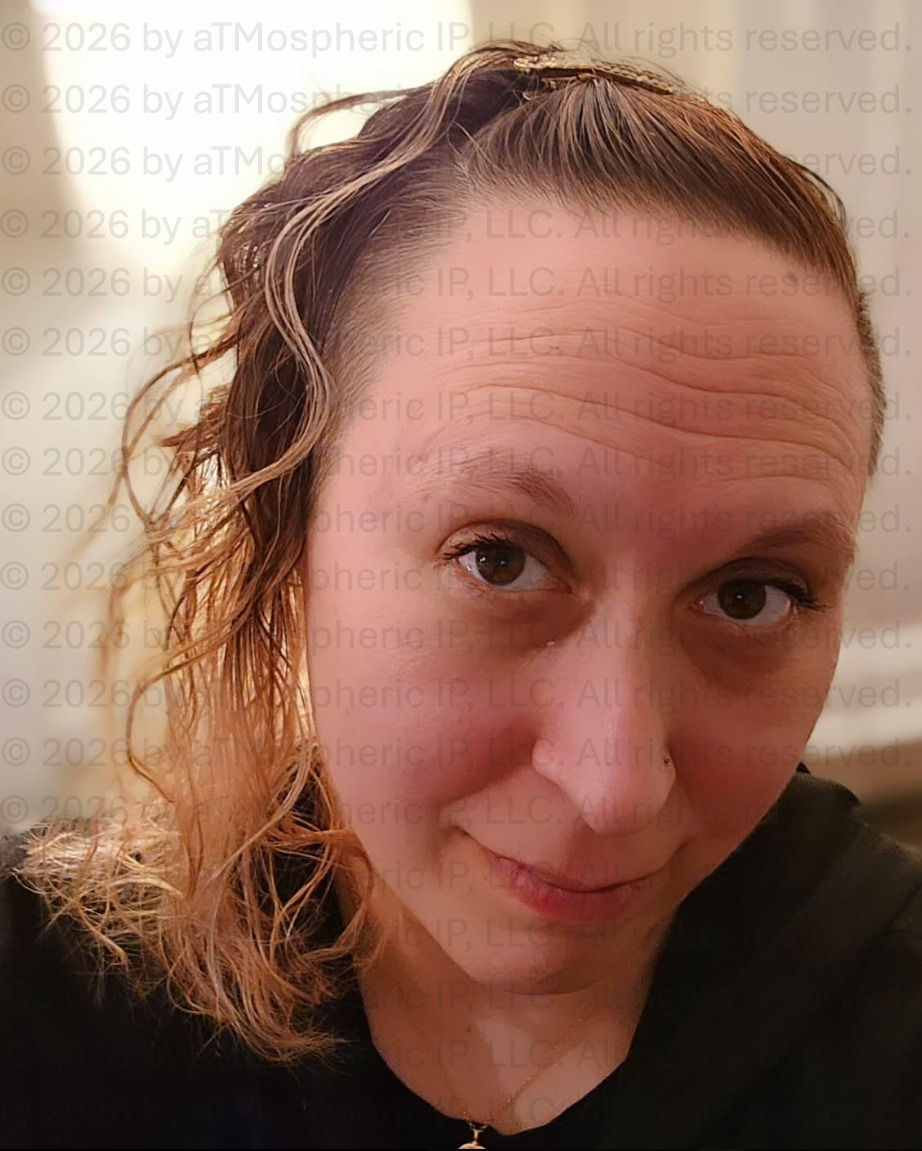
From time to time, I’ll be sharing reflections here—about my work, the books that accompany me, articles that spark new ideas, and moments from my practice—through posts like this one. Consider this space a place to check in now and then, as new thoughts take shape and find their way to the page.
At the moment, I’m beginning to dive into my spooky season reads, with a growing stack of other books waiting patiently in the wings. I look forward to carving out time soon to share more about what I’m reading—and what it’s stirring up—along the way.
Gather what you have grown, and protect it—clearly, intentionally, and well.
📅 Book a consultation: www.atmoip.com/book-online
🌐 Learn more: www.atmoip.com
📩 Email: info@atmoip.com
You can also follow aTMospheric IP (@atmoip) for grounded insights, real‑world examples, and clear guidance—no overwhelm, no unnecessary jargon.

HQ 371 NE GILMAN BLVD., STE 160
1ST FLOOR
ISSAQUAH, WA 98027
Disclaimer: This Blog post and any accompanying materials are for informational purposes only and are not intended to provide, nor should they be relied upon as, legal advice. Legal rules can change often. The information contained herein is accurate to the best of our knowledge as of the date of this post.



Comments